There are many busier spots on the island of Hvar. Trust us. But Stari Grad is a slowed-down town we find ourselves visiting most.
Stari Grad is where you begin to notice the small things. Like, which gallery owner leaves the door half open in the afternoon heat. Or the café with the best shade in the morning. And even the square that fills with neighbours exchanging gossip before dinner. It is the version of Hvar that locals protect a little more.
And once you spend a few days here, you’ll understand why.
One of the oldest towns in Europe
Founded in 384 BC by Greek settlers from the island of Paros, Stari Grad is one of the oldest towns in Europe. Its original street grid still forms the town today. You feel it most in the old centre, where narrow stone lanes twist between worn shutters, tiny galleries, hidden courtyards and homes that have belonged to the same families for generations.
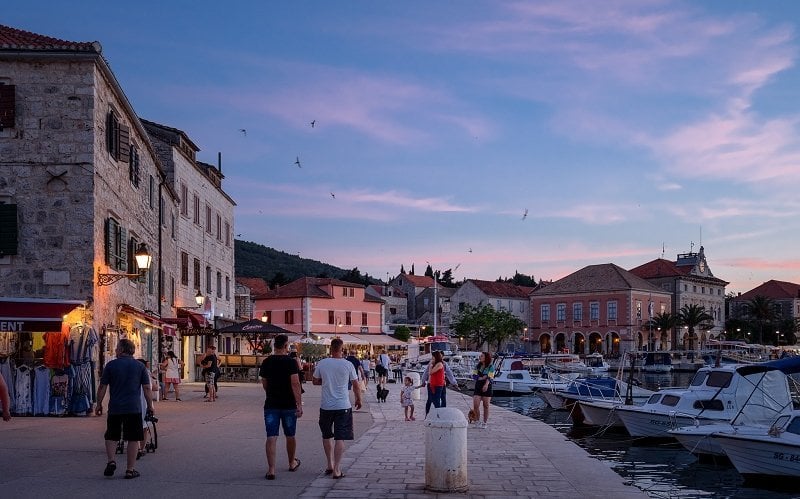
The town moves slowly, even in summer. And that is part of its appeal.
Historic attractions in Stari Grad
History in Stari Grad does not sit behind ropes or glass cases. It is built into everyday life.
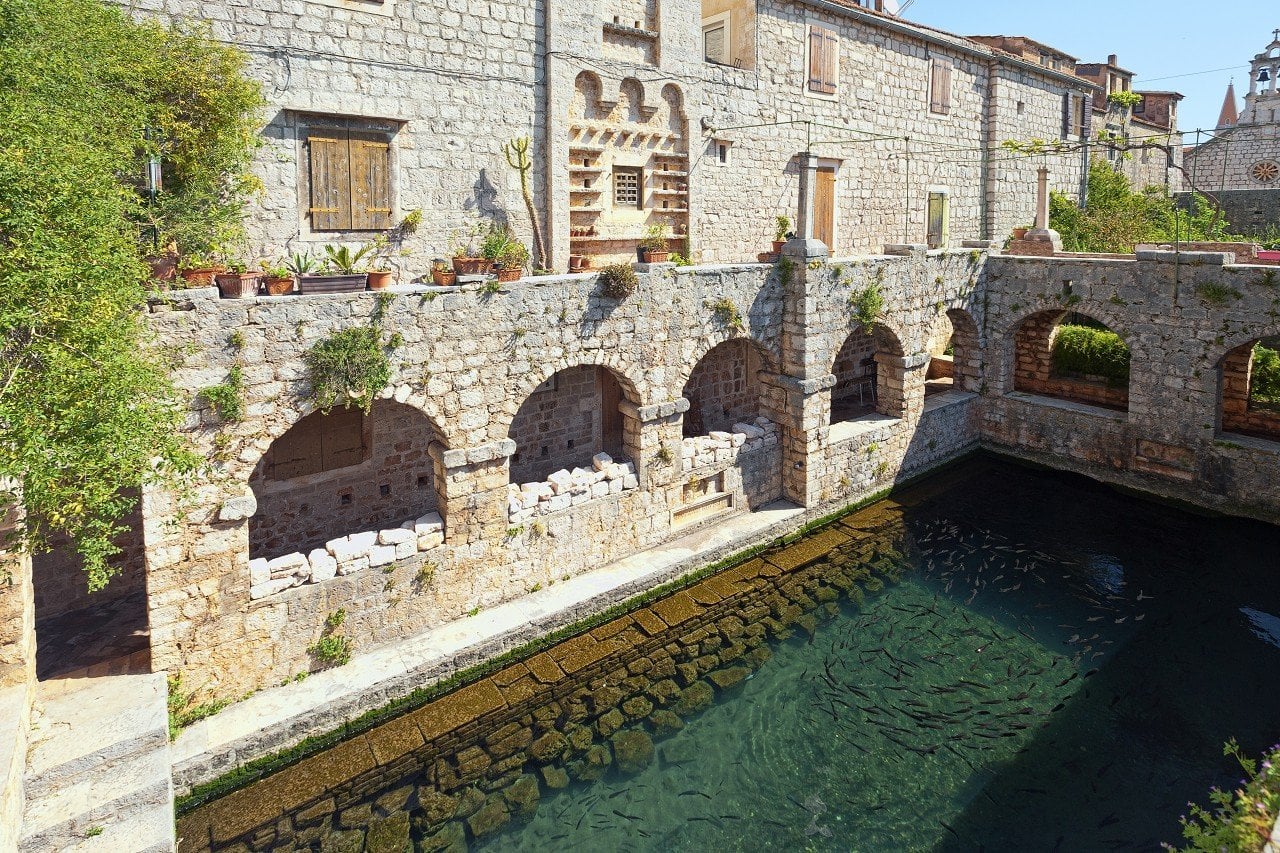
A visit to Tvrdalj Castle is essential. Built by poet Petar Hektorović in the 16th century, it is more intimate than grand. There is a seawater fish pond at its centre, Renaissance inscriptions carved into the stone walls and shaded courtyards thriving with Mediterranean vegetation.
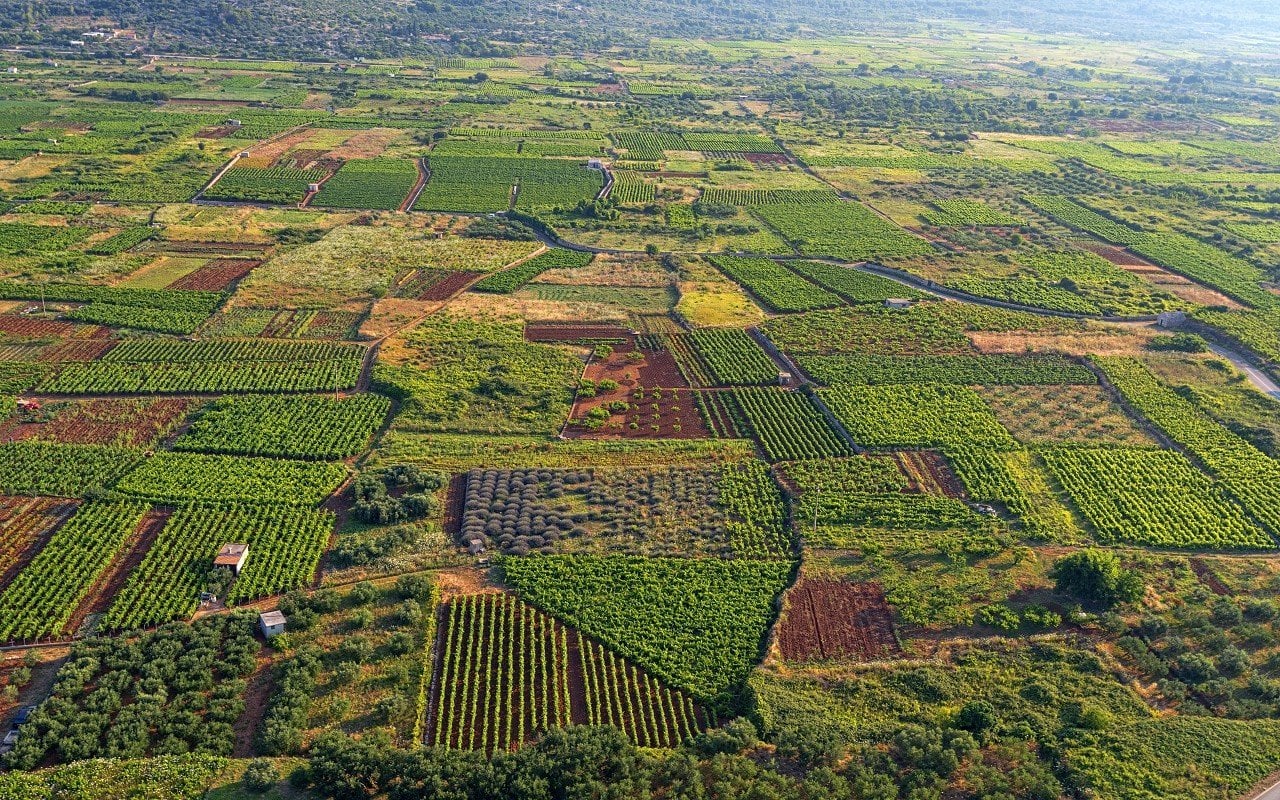
Just beyond the town sits the Stari Grad Plain, one of the island’s most important historical sites and a UNESCO World Heritage Site. The landscape was divided by Greek settlers in the 4th century BC, and remarkably, the original agricultural grid still exists today. Dry stone walls, olive groves, vineyards and narrow field paths remain almost unchanged. It is one of the clearest examples of ancient Greek land division in the Mediterranean still in use.
For a deeper understanding of the town’s past, stop by the Stari Grad Museum, located inside the Biankini Palace. The collection moves through Greek, Roman and Venetian periods, but also captures the more personal side of island life: old maps, family objects, maritime artefacts and stories tied to the people who have marked the town over centuries.
What Villas Hvar loves most about Stari Grad
But that’s enough about its history. To really know Stari Grad from the inside out, ask a local. In our case, Villas Hvar founders Majda & Dalibor are your perfect guides.
For Majda, Stari Grad is a personal memory as much as a destination.
“I rarely walk by the seaside,” she says. “That’s for tourists. I prefer passing through the old town, stopping in galleries, speaking to people I know, checking what’s new.”
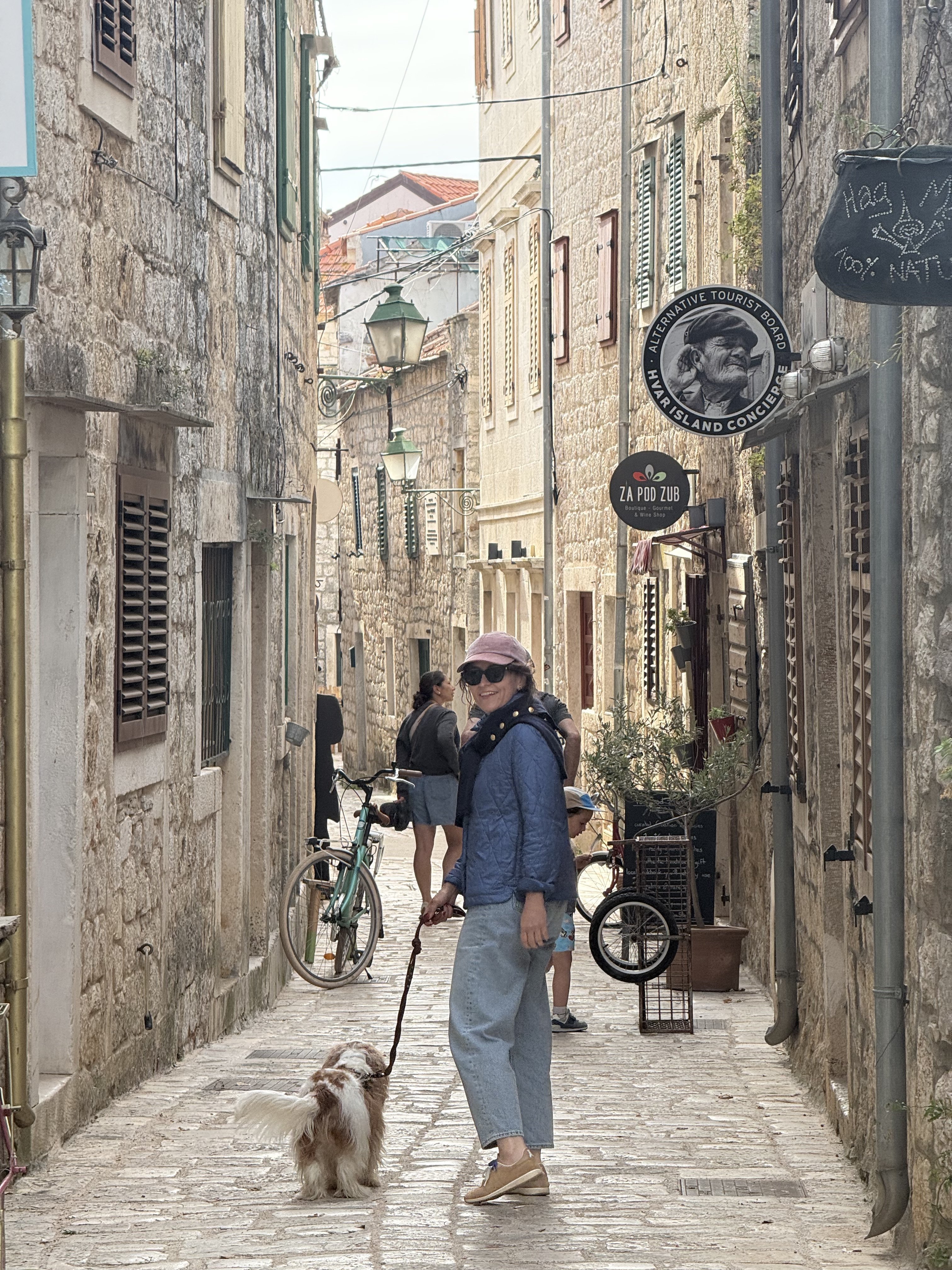
Her favourite route starts around Škor square and continues through the old stone streets toward Tvrdalj.
She often stops at Maya Con Dios Gallery to look at the lavender paintings, then wanders into Lukrecija Bar & Concept Store or Fantazam Gallery.
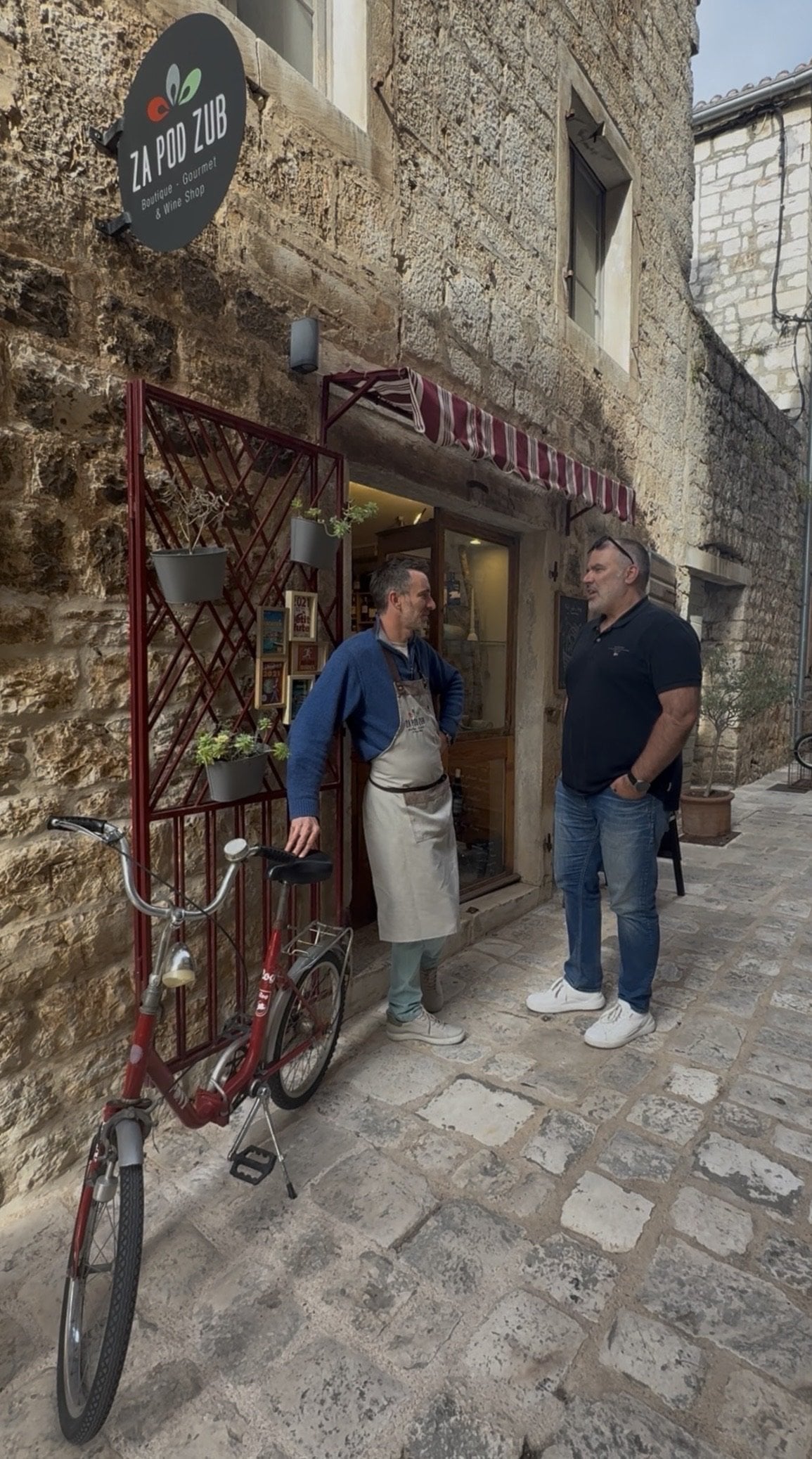
For gifts and small island finds, she loves Za Pod Zub and the French-owned Hvar Bazaar for hats and beach bags.
Then there is St. Stephen’s square.
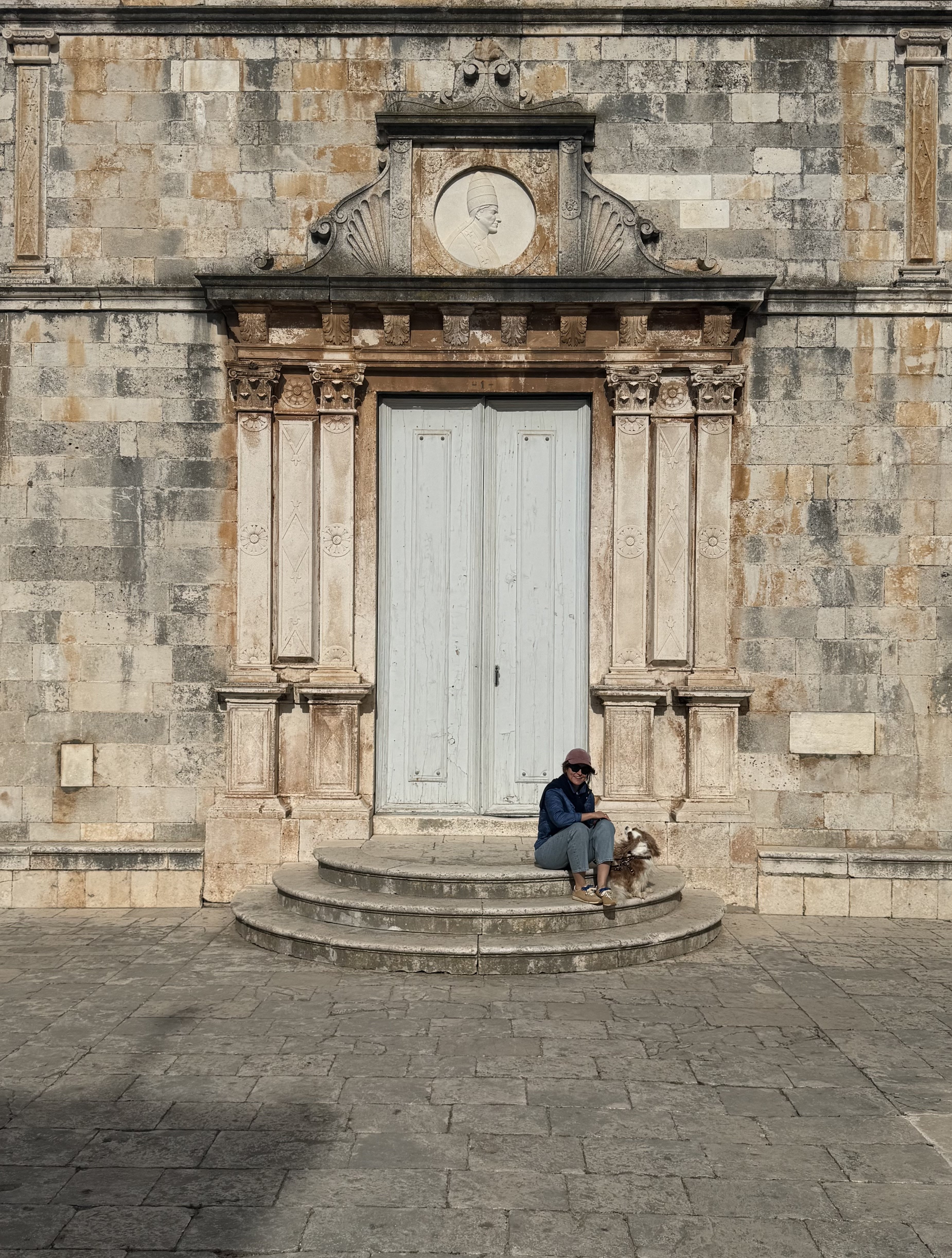
“I sit on the church steps and listen to the bells. Time completely stops there.”
Restaurants worth your time in Stari Grad
Stari Grad has no interest in rushing you through dinner.
Dalibor often heads to Eremitaž. “One of the few proper sea-view terraces in town,” he says. “And still family-run in the best possible way.”
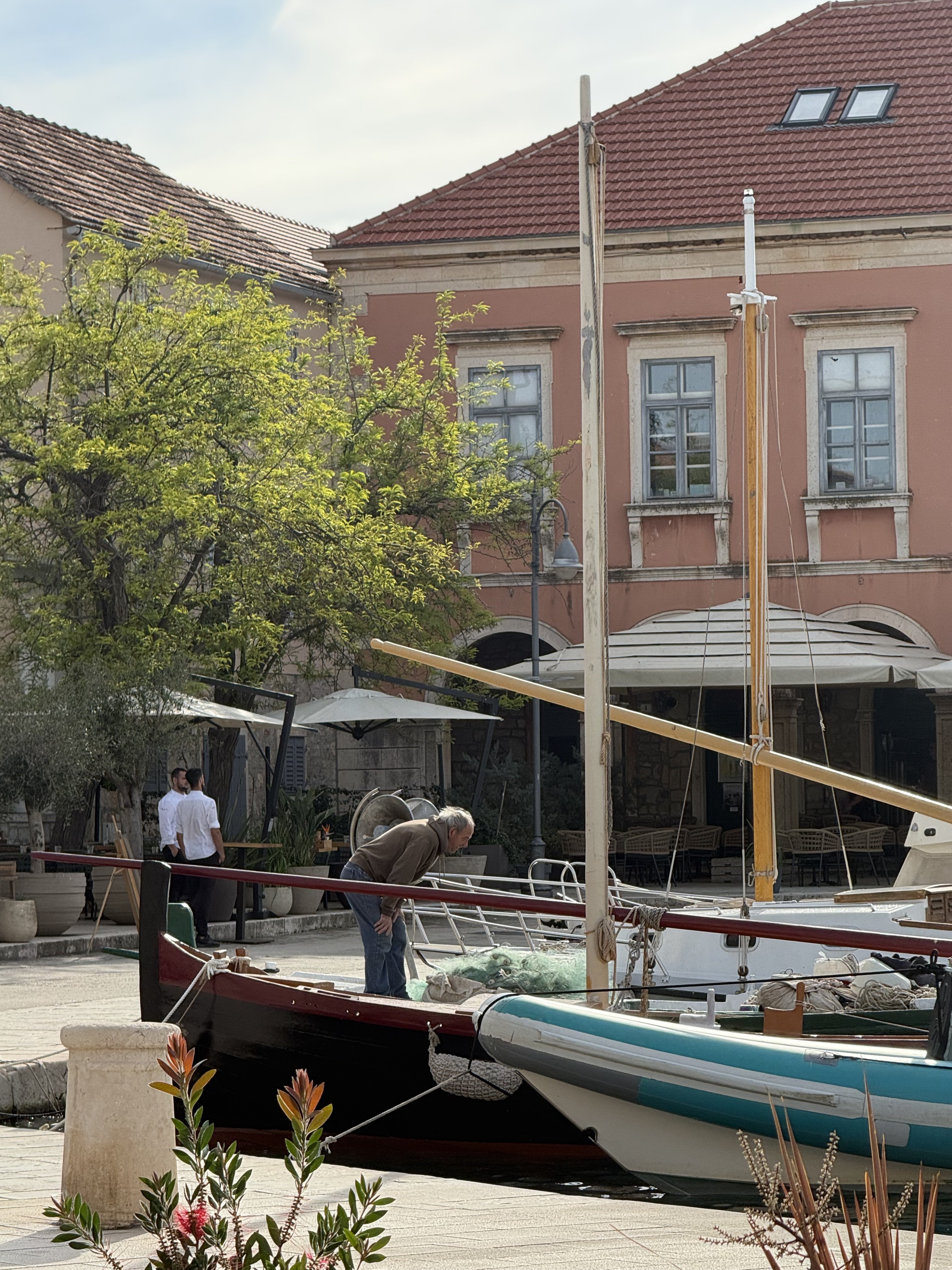
For wine and dinner outside in the old streets, Majda loves the tucked-away Pinetta.
Coffee, cocktails and the Stari Grad passeggiata
There is a specific hour in Stari Grad when everybody seems to appear outside at once.
You’ll see locals greeting each other from balconies and children running across squares. And people always stop mid-walk for conversations that somehow last 40 minutes.
But when it’s time for a refreshment, Majda loves sunset drinks at Lampedusa Bar and Neptune Coffee Bar.
Dalibor prefers Lampedusa in the morning. “Natural shade, breeze, comfortable chairs. Perfect coffee spot.”
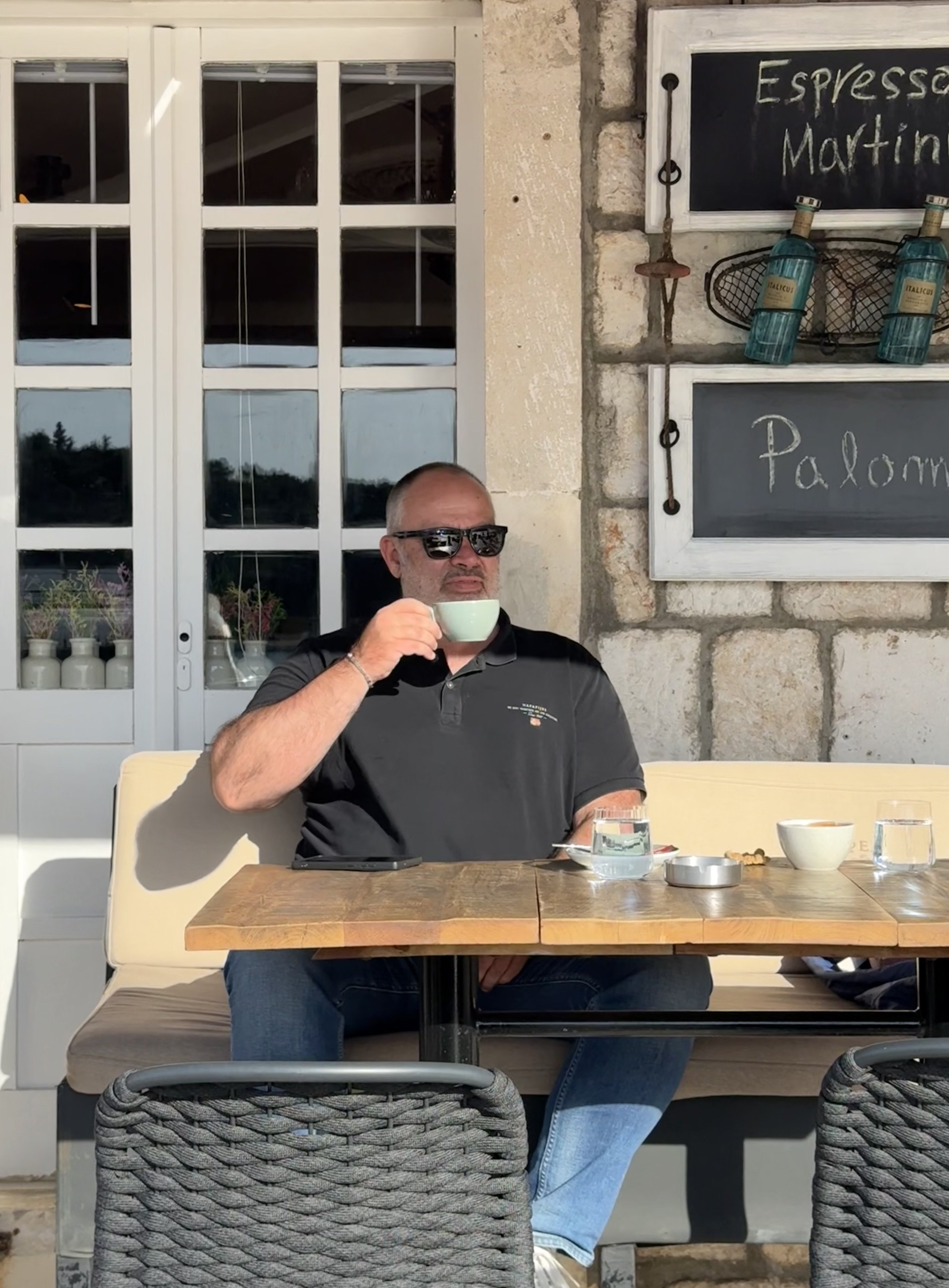
If you are here during the summer, ask around for the Dancing Street Festival or the jazz and wine evenings around Škor square. The town feels most alive then.
Beaches, walks and slower afternoons
One of the best things to do in Stari Grad is surprisingly simple: walk.
The paths around the bay stretch in both directions and completely change mood depending on which side you choose. The left side feels calmer and more secluded. The right side is livelier, especially in summer.
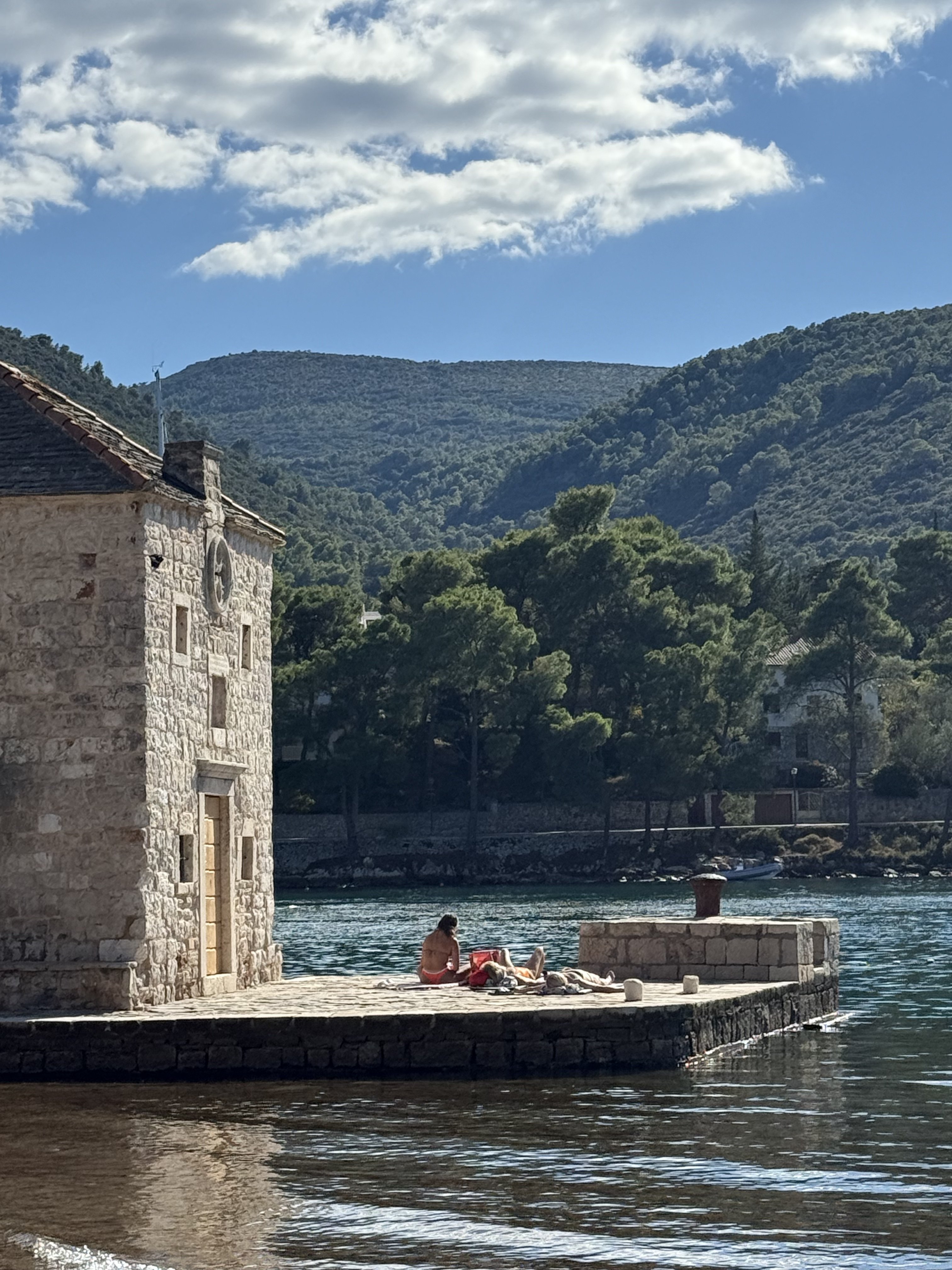
Majda walks there often with Sophie, her Cavalier King Charles Spaniel. Dalibor does the same with Hachi, his Labrador, though mostly in winter when the town quiets down.
For swimming, Majda heads toward the small pebble beaches near Maslinica bay, then stops at A•Bay Beach Bar afterwards for a terrace latte.
Dalibor’s recommendation? “Rent a sunbed at Vaiana beach and do absolutely nothing.”
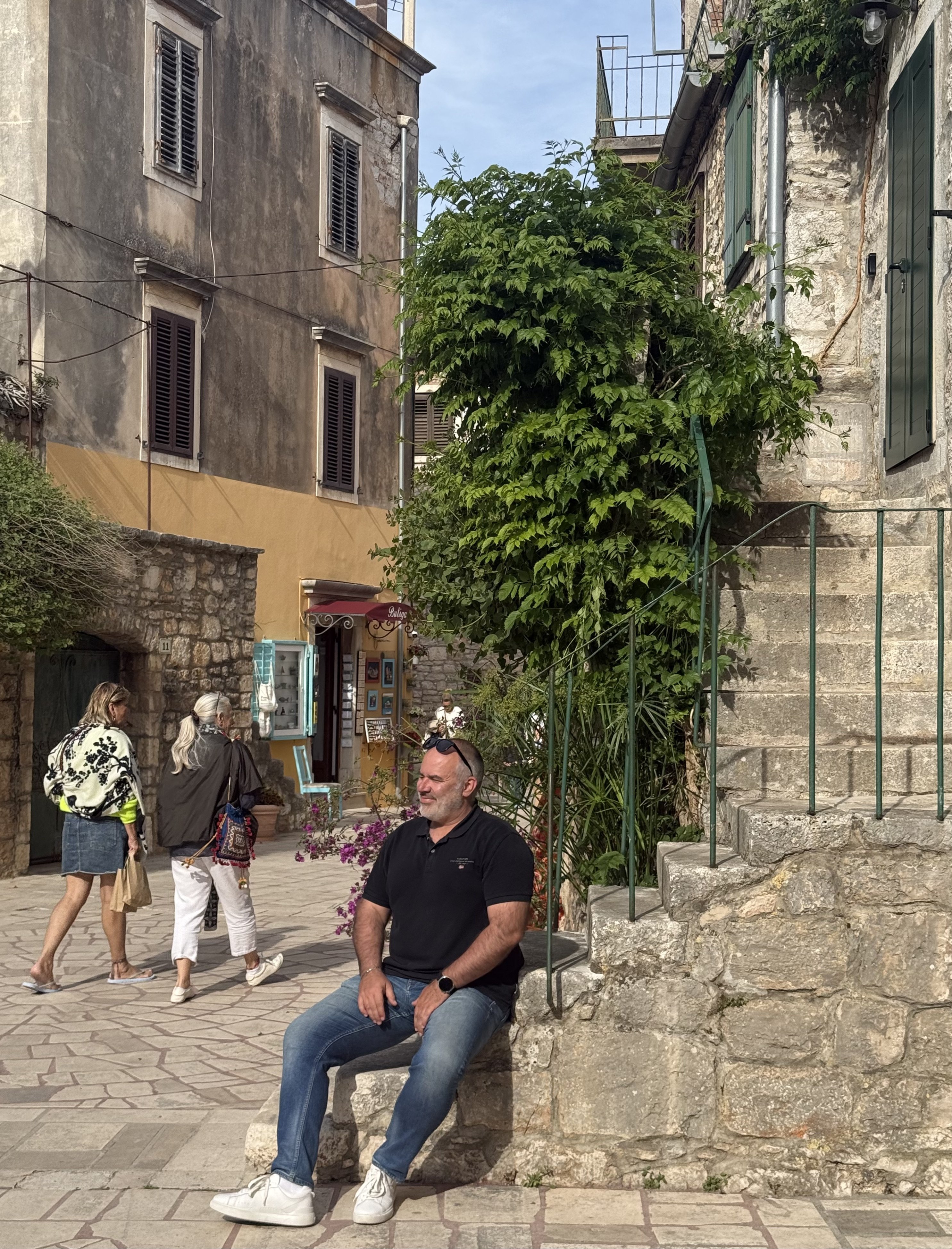
Honestly, that may be the best advice in this guide.
Make sure you see this part of the island properly
One thing both Majda and Dalibor always tell guests: leave time for the unassuming parts of the island, too.
Hike up Glavica hill above town. Take a boat into the deeper parts of Stari Grad bay. Spend an afternoon with lunch in Tiha bay. Visit villages where olive trees are older than most countries.
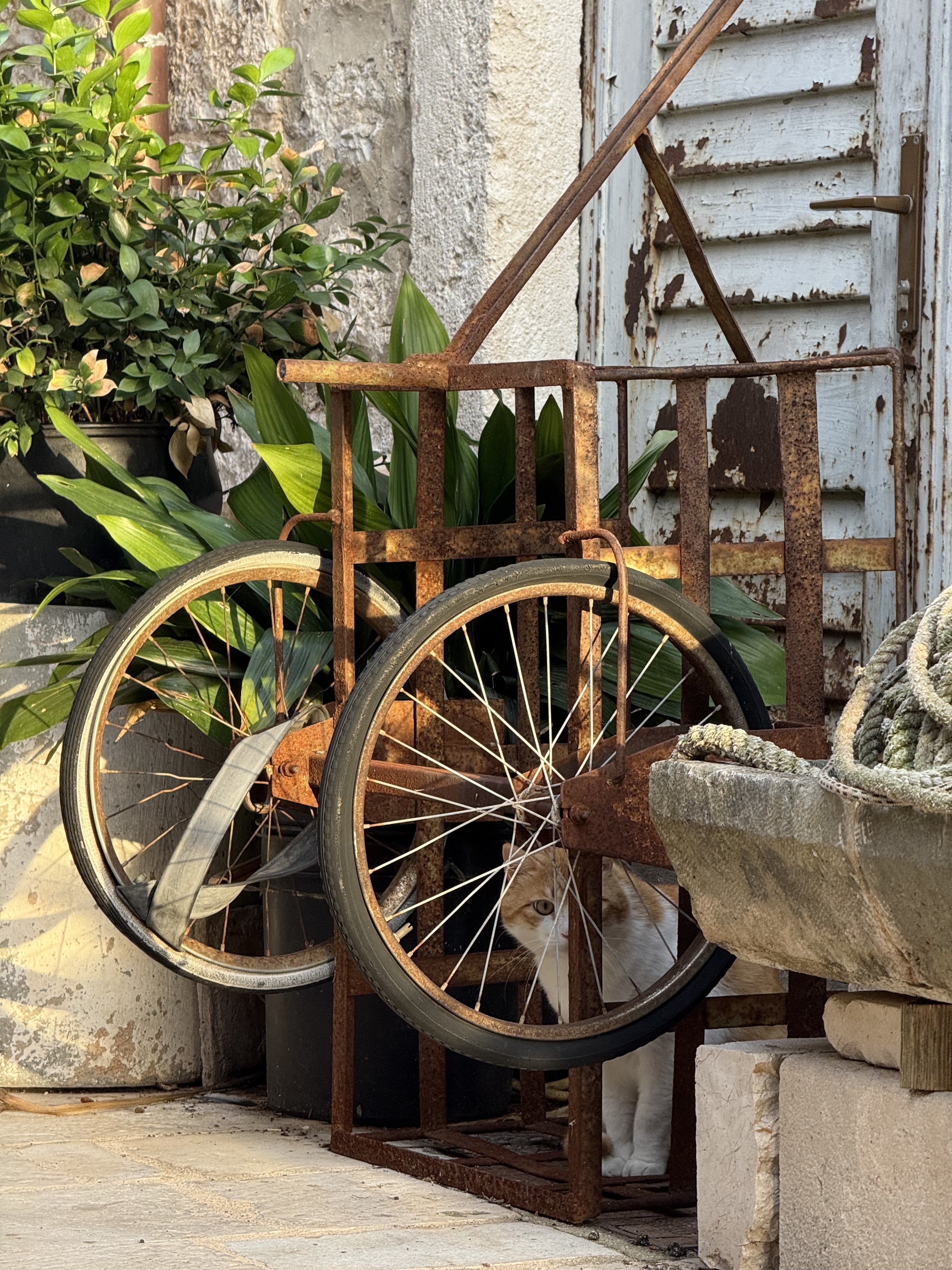
This side of Hvar is quieter, yes, but also far more intimate. That is the part they love sharing most with guests.
Why we always return to Stari Grad
Stari Grad best showcases Hvar’s hidden rhythm. There is no urgency. No overdone luxury. Only people wholly connected to where they live.
And once you feel it, even briefly, you begin to understand why so many guests return. It is part of the island’s beat and the ideal spot to let go and just be. This is luxury done the local way.