Not every house on this island has a story. These twelve do, and the stories are why they matter.
Hvar has been built in stone for centuries. The walls are thick, the doors are heavy and the houses that have survived this long tend to have done so because someone, at some point, decided they were worth the effort. The renovations behind these nine properties were not quick. They were not cheap. And none of them were motivated by the rental market.
They were motivated by the attachment to a place that makes people spend seven years on a single house, track down the original headboards from a derelict room and have them remade by hand or move back to an abandoned village because the family home was still standing and someone had to do something about it.
That is the thread running through all twelve of these houses. And it is the reason they feel different from everything else on the island.
Villa Hera — Zaraće
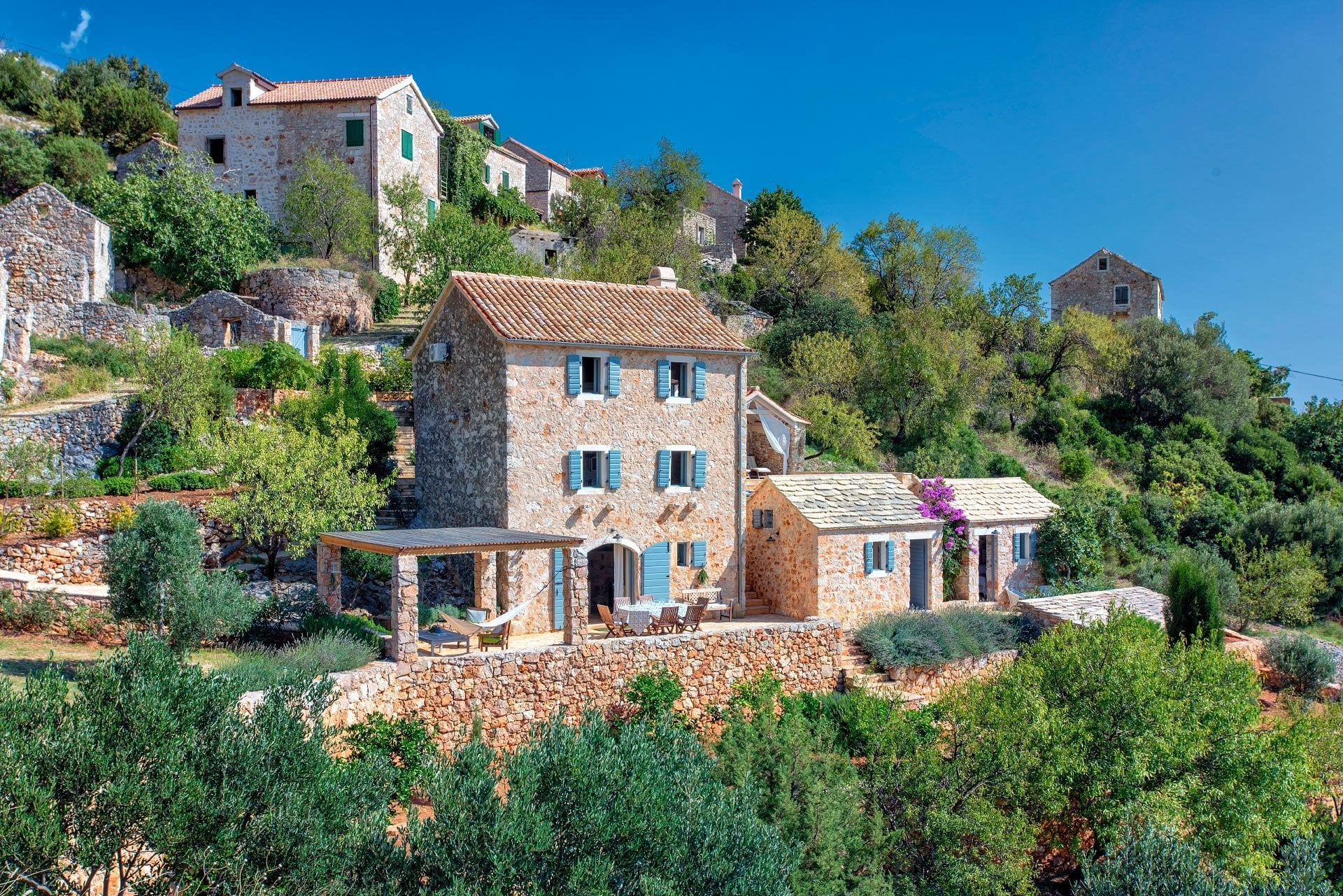
Seven years. That is how long the owners spent on Hera — stone by stone, using only natural materials, in the village of Zaraće, one of the last truly preserved indigenous villages on the Adriatic. The result is a complex of traditional Dalmatian stone houses surrounded by fig, almond, olive and pine, with a 15m² pool, ancient bread ovens in the summer kitchen and sea views from every terrace. Stari Grad and Hvar Town are both ten minutes away, though Hera has a way of making that feel irrelevant.
Villa Hebe — Dol
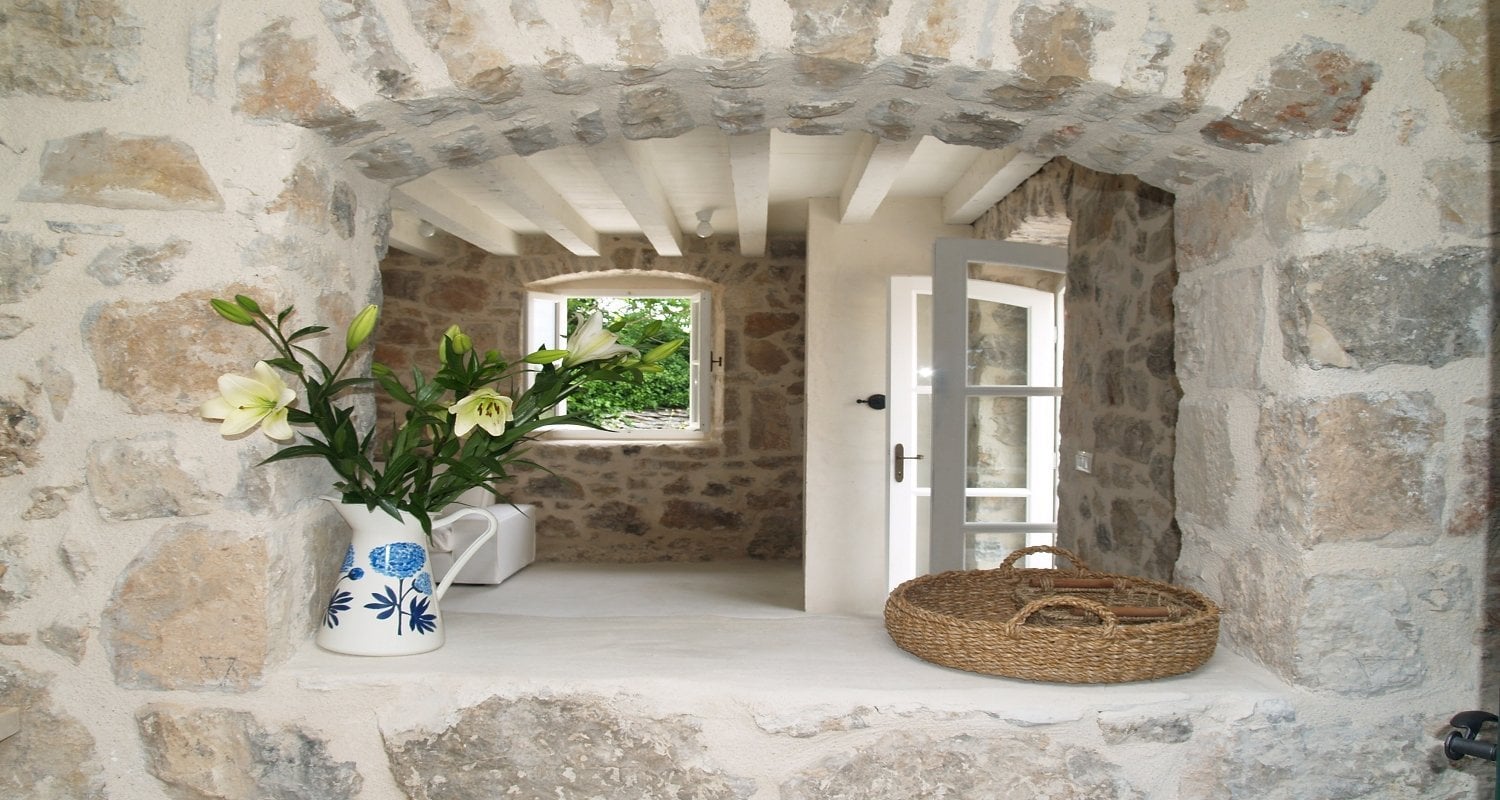
Three century-old stone houses, restored in 2007, on the outskirts of a village in the heart of the island, with views across to Brač and the Stari Grad Plain. The owners are art dealers and it shows. There are five bedrooms, four bathrooms, a semicircular stone bridge connecting the upper terraces and a pool enclosed by high stone walls. Stari Grad is only three minutes away.
Villa Ourea *Zanino — Velo Grablje
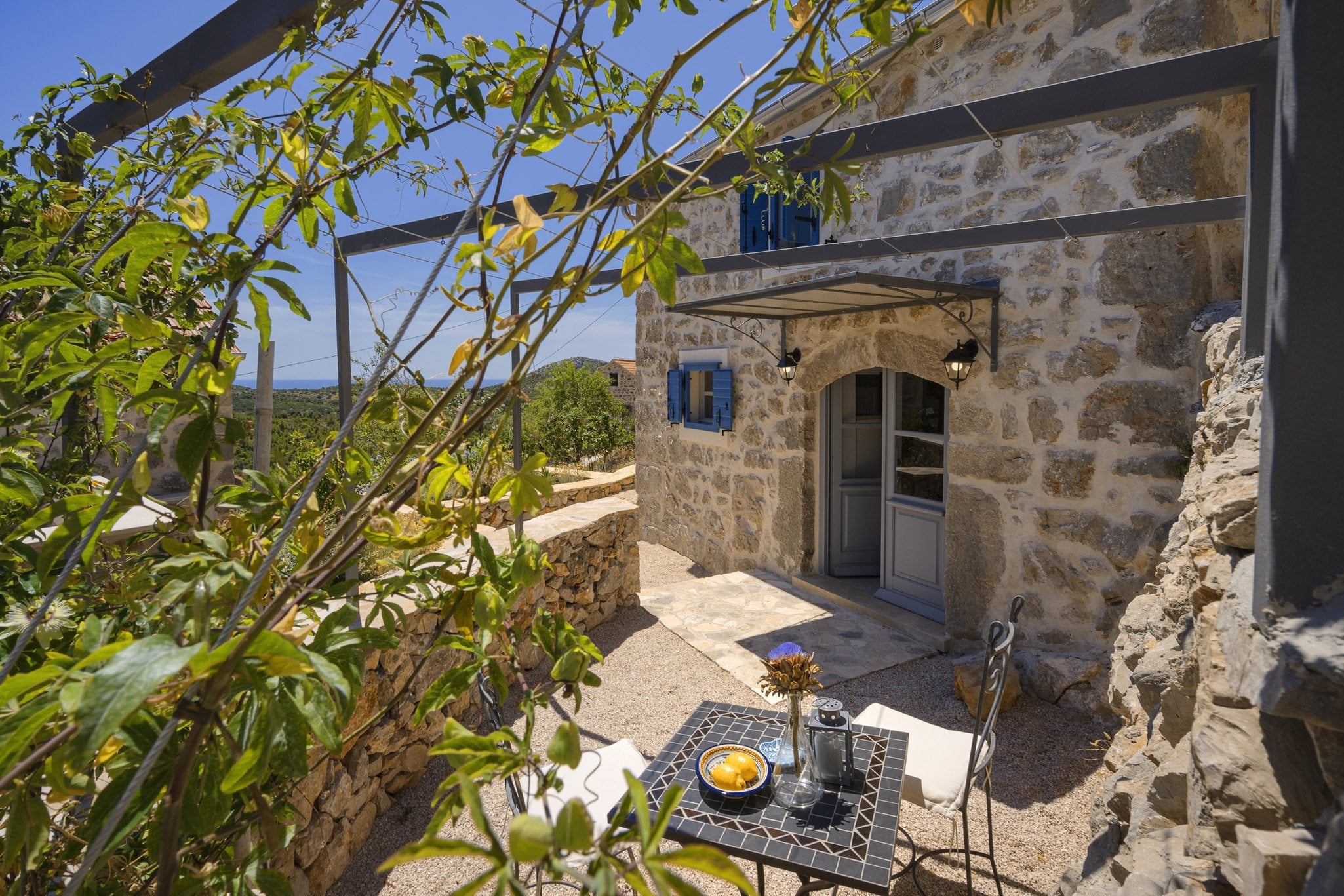
Two 18th-century stone houses, patiently restored in 2021, sitting above one of the most quietly beautiful villages on the island. The headboards in both double bedrooms were handmade from originals found in the house, a detail that says everything about how this renovation was approached. There is a heated counter-current pool, sauna, terrace dining for eight and three exceptional restaurants within five minutes.
Villa Geras (Vertigo Palace) — Jelsa
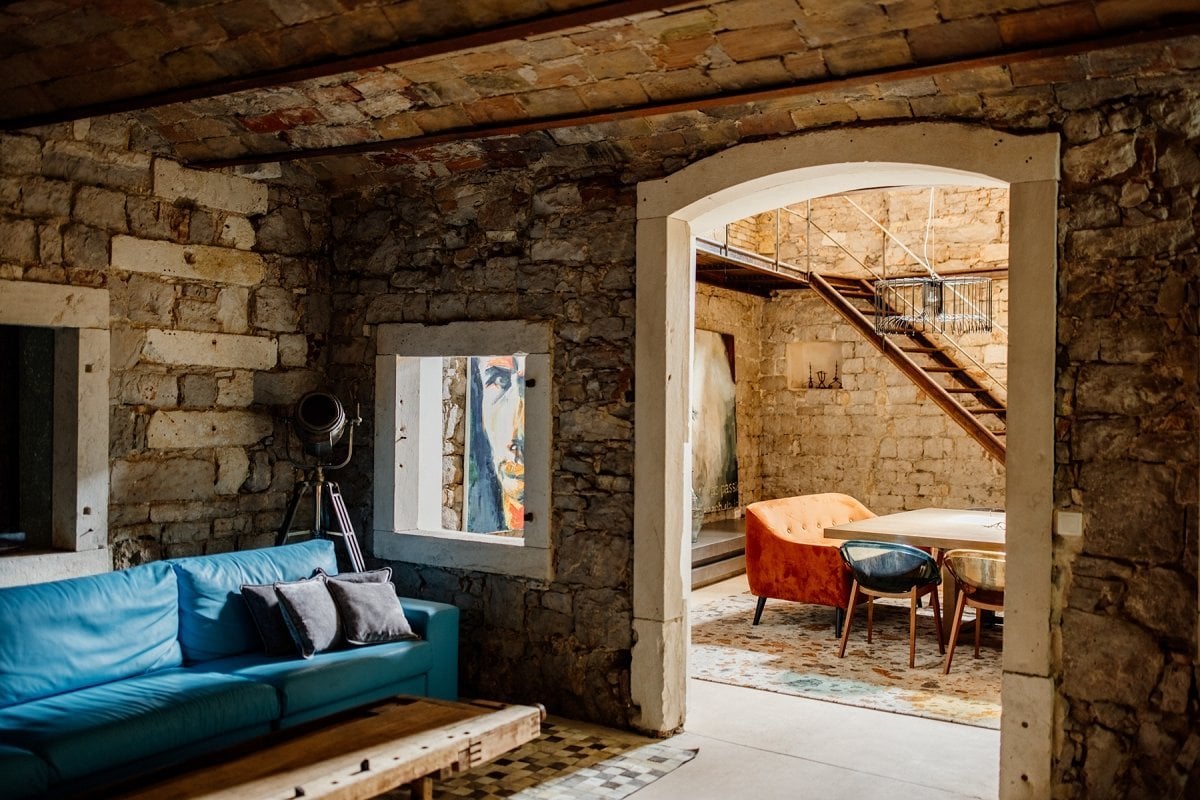
Built in 1900 and transformed in 2013, this 600m² house in the old quarter of Jelsa operates on a different scale. Four bedrooms, a dining table for twelve, a 15-metre pool, cold plunge, sauna, gas fireplace and a surround sound system for your perfect island evening. There are high stone walls on every side. The owners have taste that can't be designed and it shows in every room.
Villa Leto *Fulmin — Malo Grablje
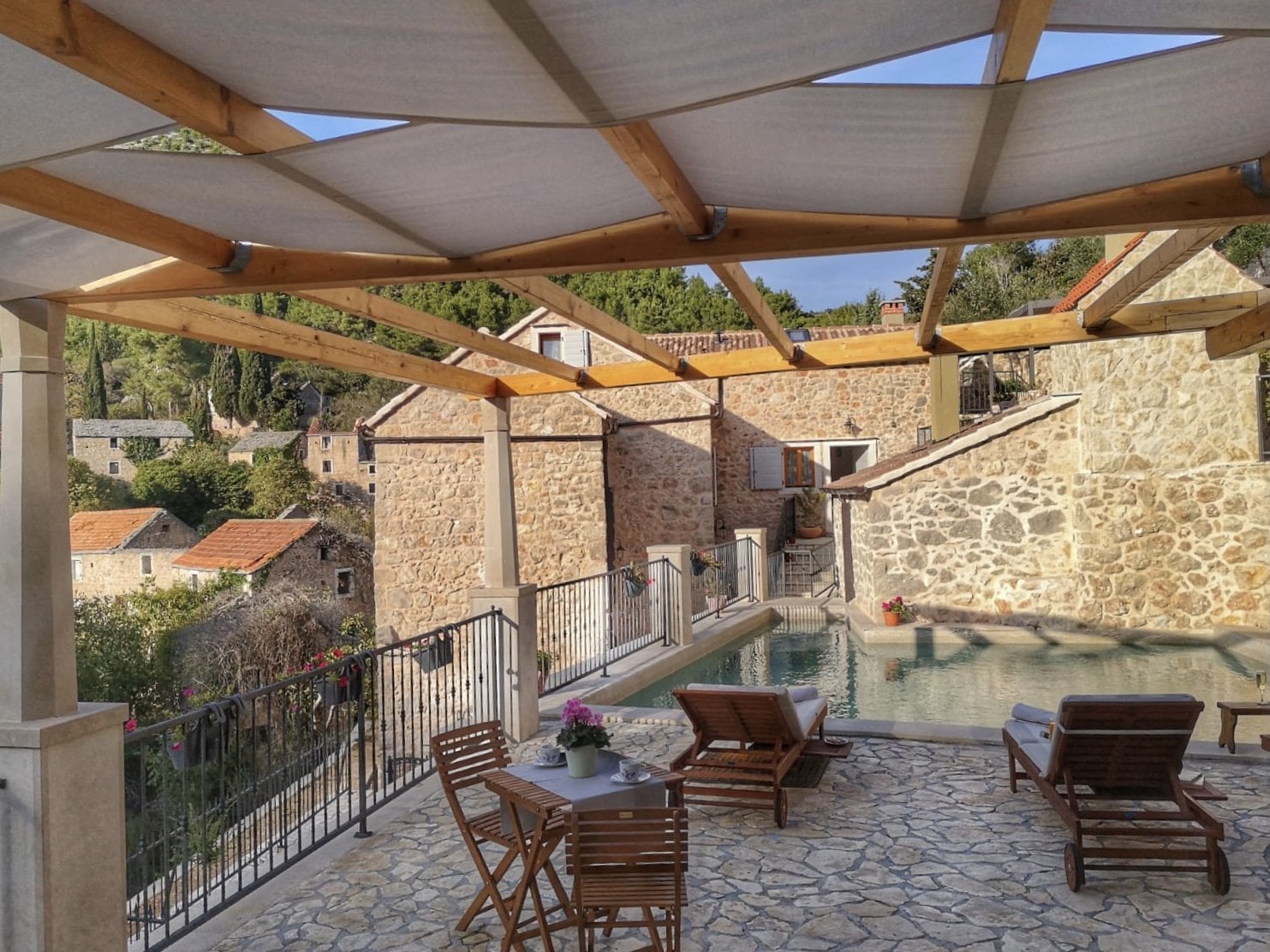
The last residents left Malo Grablje in 1950. Villa Leto — a family home dating to 1907, restored by a family member in 2020 — sits at the centre of that history. You’ll find three floors, four bedrooms, a gym, jacuzzi, sauna, heated pool, organic vegetable garden and a 1940s kitchen cabinet that was too good to throw away. Konoba Stori Komin, one of the island's most particular dining experiences, is within walking distance.
Villa Harmonia — Zavala
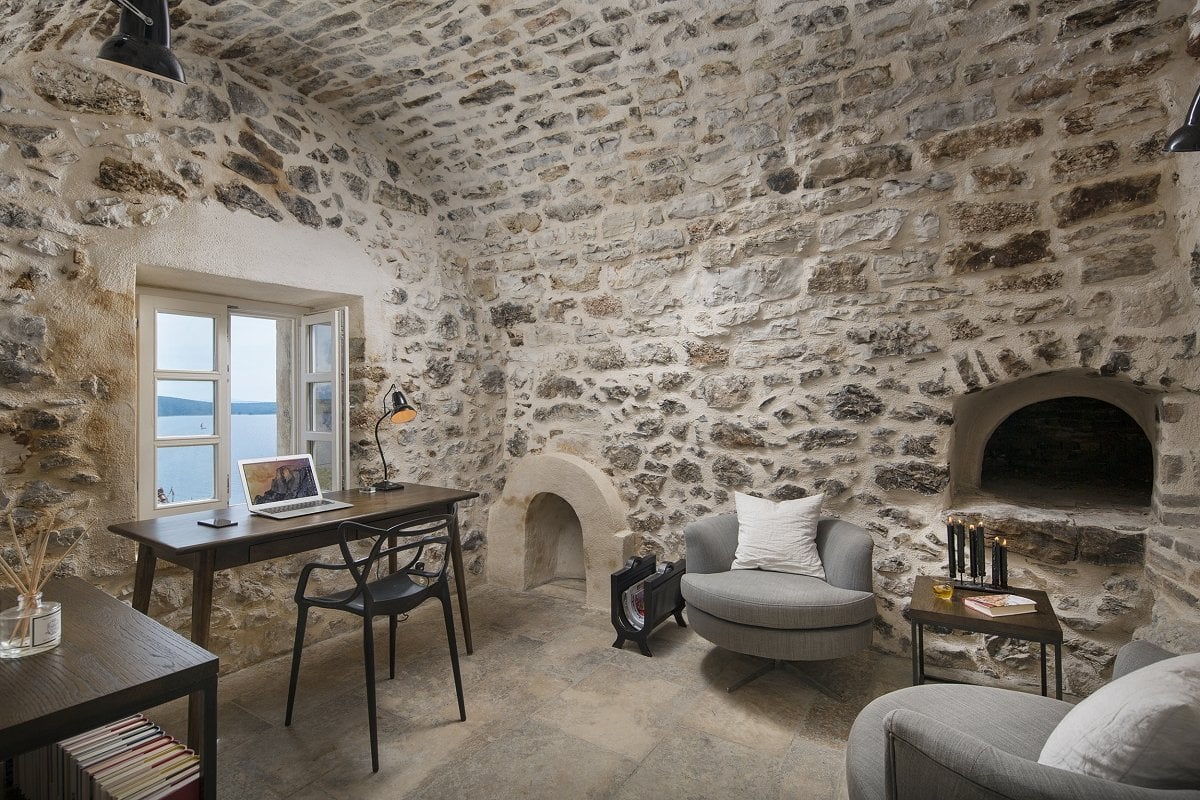
The owners were Villas Hvar guests for years before they bought a property of their own. That history shows in every decision — the custom-made kitchen, the Smeg appliances and the Villeroy & Boch bathrooms. It is a 19th-century Dalmatian farmhouse on the south-facing coast near Zavala's best beaches, with five bedrooms, wood-burning stoves and a pool that in 2024 had its wall removed to open the view straight to the sea.
Villa Eos (St. George Court) — Humac
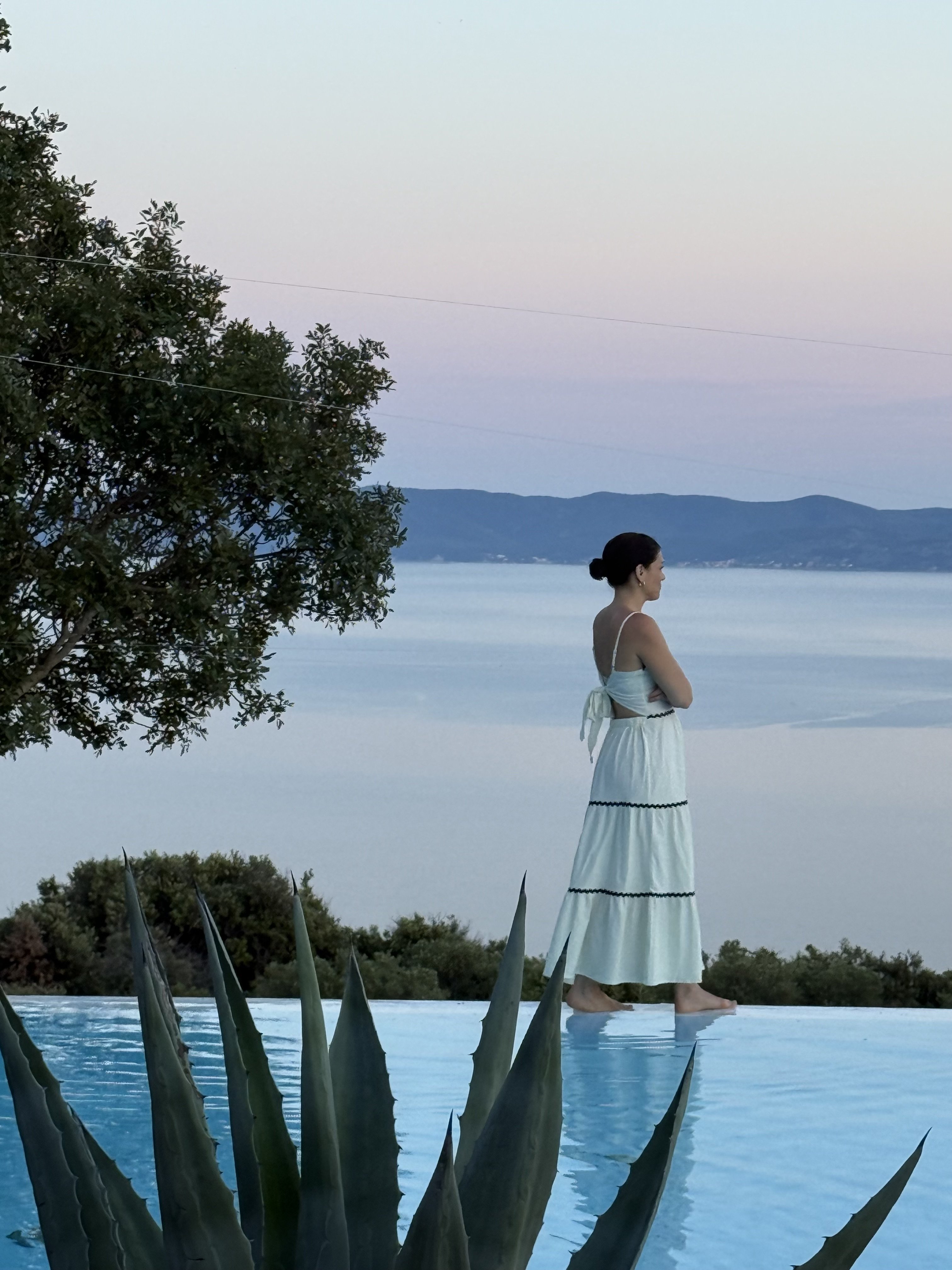
30,000m² of Dalmatian countryside near one of the most untouched villages on the island. These early 20th-century stone houses, restored in 2006, have generated their own electricity and drawn their own water ever since. There are four bedrooms across separate houses. An infinity pool facing south, a courtyard bread oven and a tennis court. Cypress, lavender, sage and olive groves on every side. The nearest sound is nature.
Villa Aion (Casa M) — Zastražišće
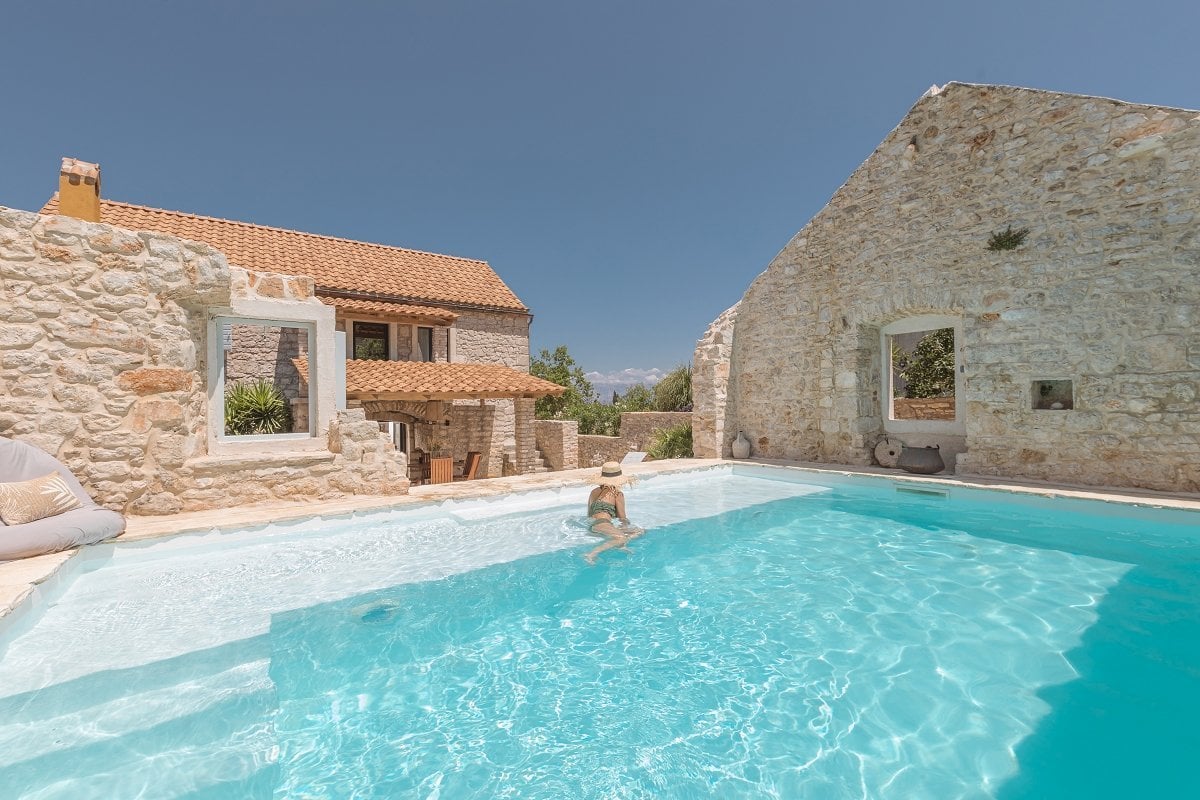
Built in 1888 and never out of the family's hands, Villa Aion was renovated in 2022 with an attention to material and colour that makes every room feel considered. The courtyard pool — 35m², heated, surrounded by Mediterranean herbs — is, by our own admission, a personal favourite among every pool on the island. Two additional stone houses added in 2023 bring the total to four bedrooms. There is a jacuzzi, a BBQ terrace and the village of Zastražišće on the doorstep.
Villa Phorcys — Zaraće
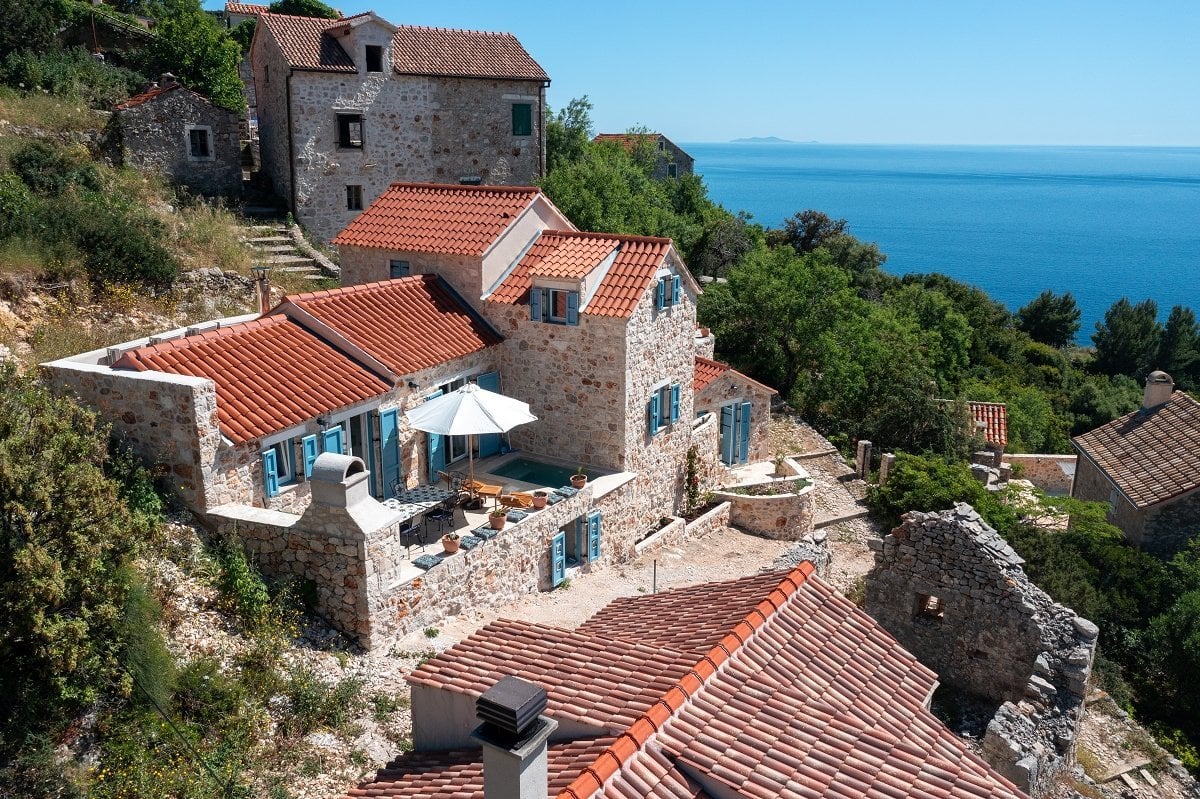
An ancestral home, completely renovated in 2024, with the original stone left exactly where it was. Two terraces face different points of the compass — one catches the morning, one looks straight out to Vis. You’ll find a wine fridge, a 55" OLED Ambilight TV, built-in fireplaces, a dip pool and a rooftop with sunbeds. Better yet, you’re just three minutes to the beach. The village has a handful of residents and no crowds, which is rather the point.
Villa Epimetheus — Vrbanj
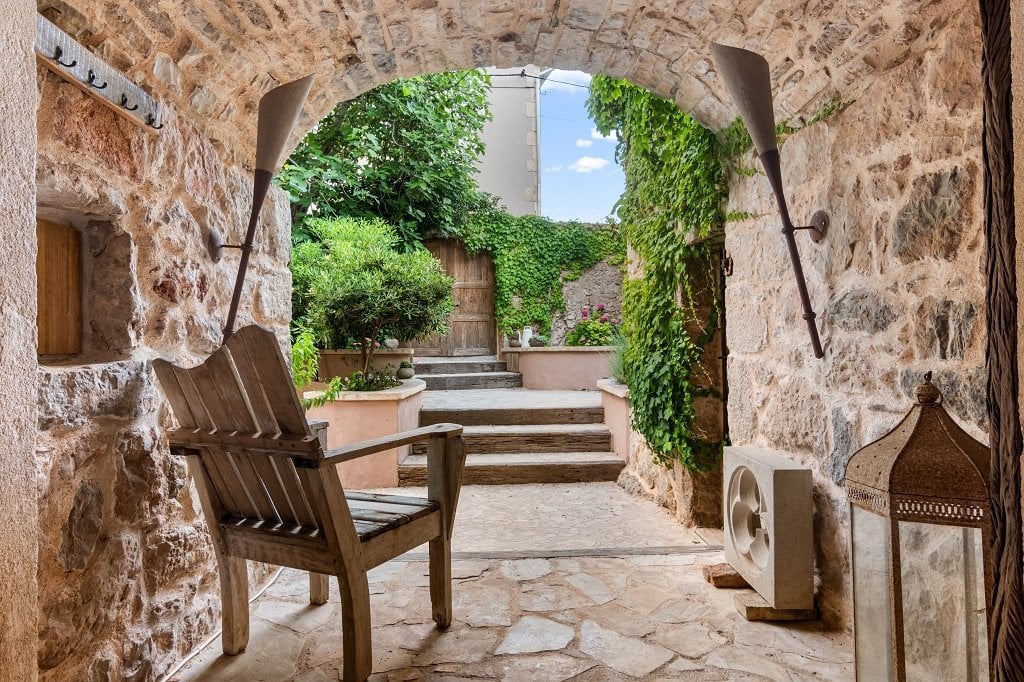
A winery from 1872, renovated between 2021 and 2023, sitting in the heart of the village of Vrbanj in the centre of the island. The old konoba, where the wine was once pressed, is now the living room, dining room and kitchen, with a large recycled teakwood table, original stone walls, hand-forged glass doors and underfloor heating for the winter months. There is an 8x4 saltwater pool with a counter-current system in the garden, five bedrooms and a hand-carved wooden gate at the entrance. The original floorboards, beams, doors and windows were retained throughout.
Villa Erebus D (Dvor Giovanni) — Pitve
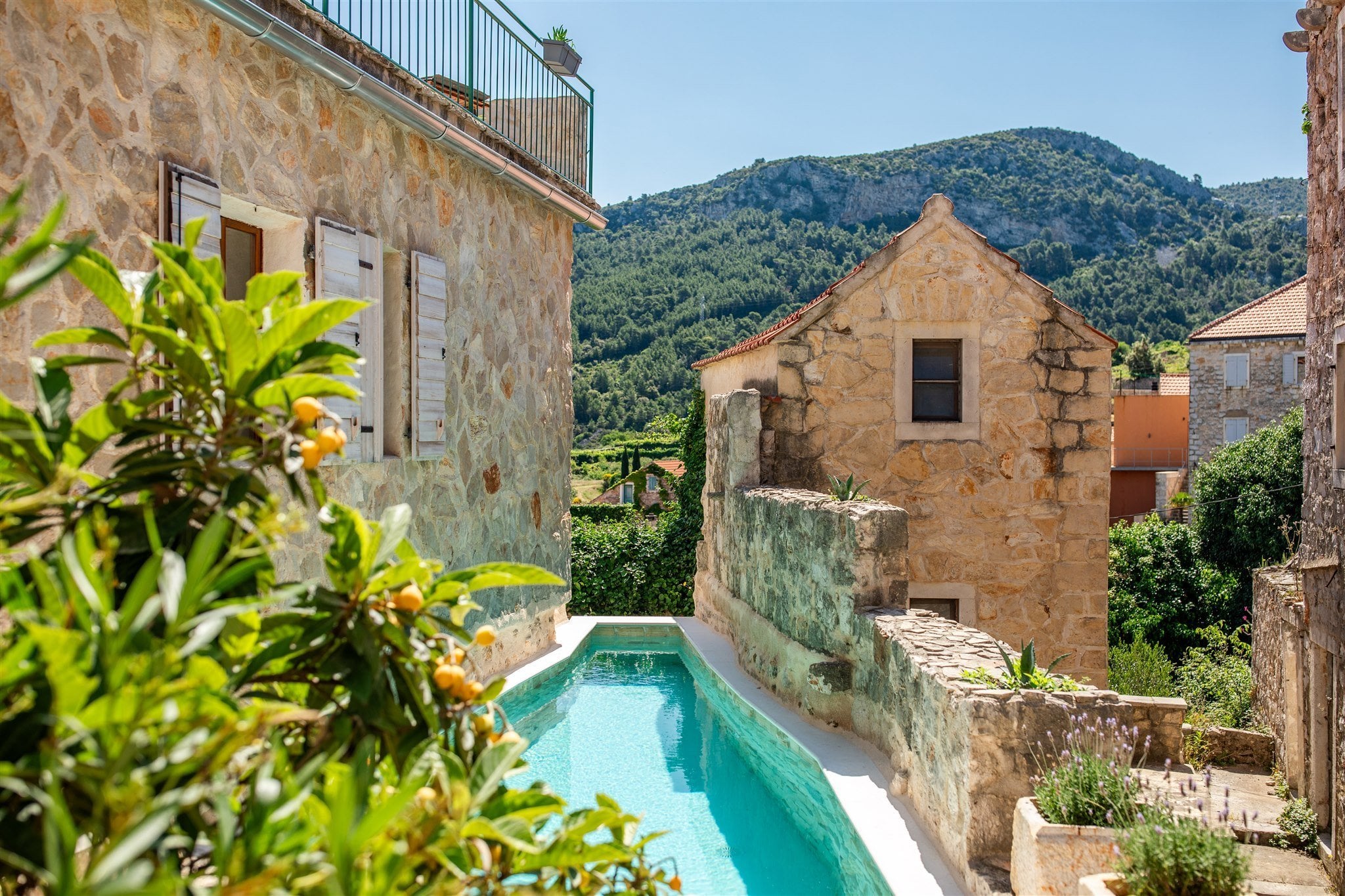
One of four 15th-century stone houses in a shared courtyard in the village of Pitve, each restored by a local couple and completed in 2024. Villa Erebus D is Majda's personal favourite of the four — four bedrooms across three floors, a sauna, gym, games room and a heated pool tucked between ancient stone walls. Dvor Duboković, one of the island's best traditional restaurants, is a short walk away. The whole complex can sleep up to 26 guests across the four houses. There is nothing else like it on Hvar for groups of that size.
Villa Theia (Heraclea) — Hvar Town
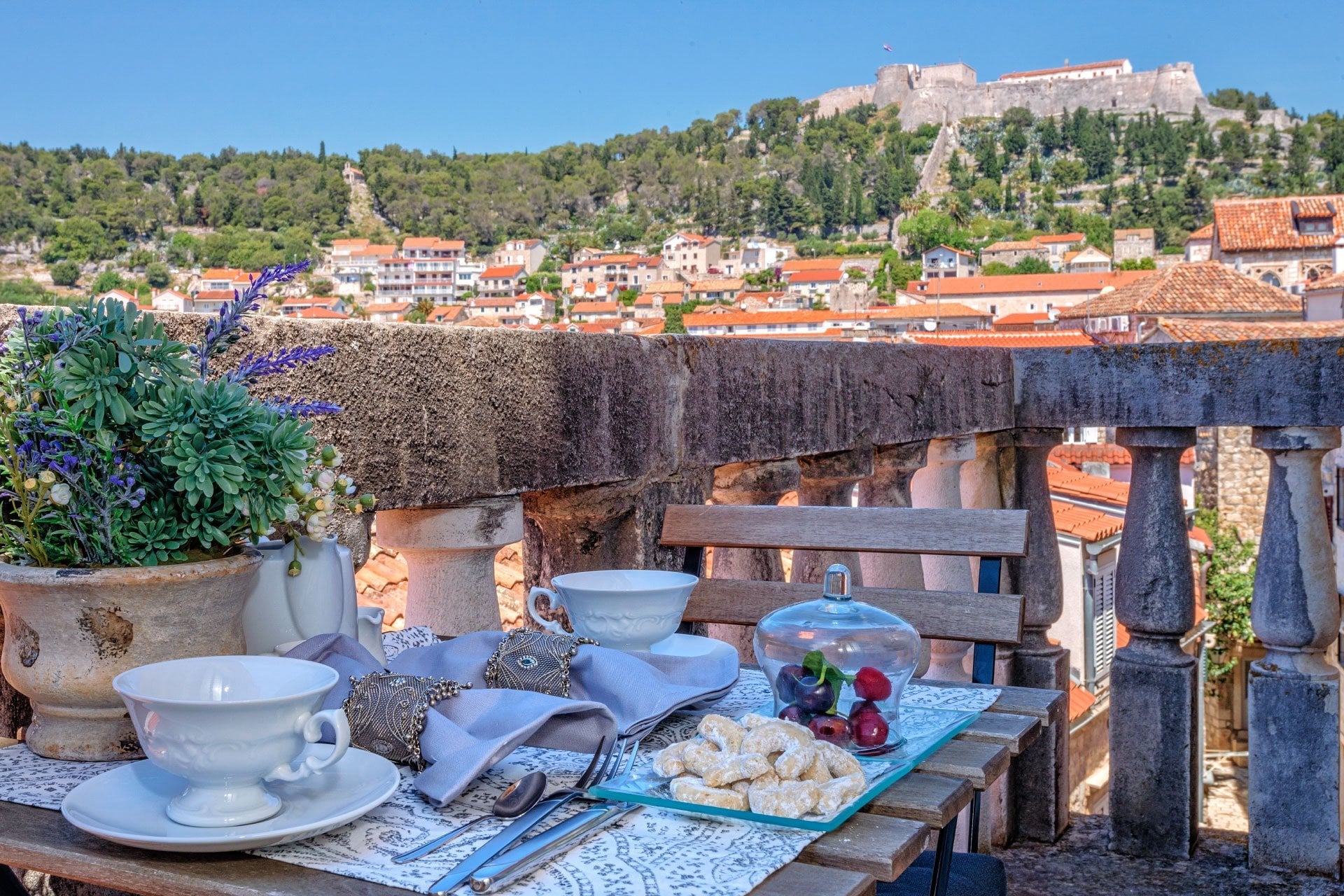
Built in 1612 for the Stajlić family, later owned by the Marchi family and now under the protection of the Institute for the Protection of Cultural Monuments. Villa Theia sits in the heart of Hvar's old town — 450m² across a baroque house and a connected Gothic house, with five bedrooms, a pool with a retractable roof, a sauna, a jacuzzi, a wine cellar and a 200m² inner courtyard enclosed by high stone walls. It is, by some distance, the most historically significant address in our collection.
A house with history
A house with a history is a different thing from a house built to be rented. The difference is not always visible in photographs, but it is always present when you arrive. You’ll feel it immediately in the weight of the doors and the thickness of the walls.
These twelve houses were renovated because someone decided that what their family had built deserved to survive. We are glad they did, and we are glad every summer to share them.