A few kilometres from Hvar Town on the old road to Stari Grad, two villages on Hvar sit in the hills above Milna bay, telling a more complicated and honest version of what this island is and has been. They are two of the most singular villages in the Adriatic. Neither of them is easy to summarise, and neither requires it, but they should be added to every list of things to do when visiting Hvar island.

Villages of Malo and Velo Grablje


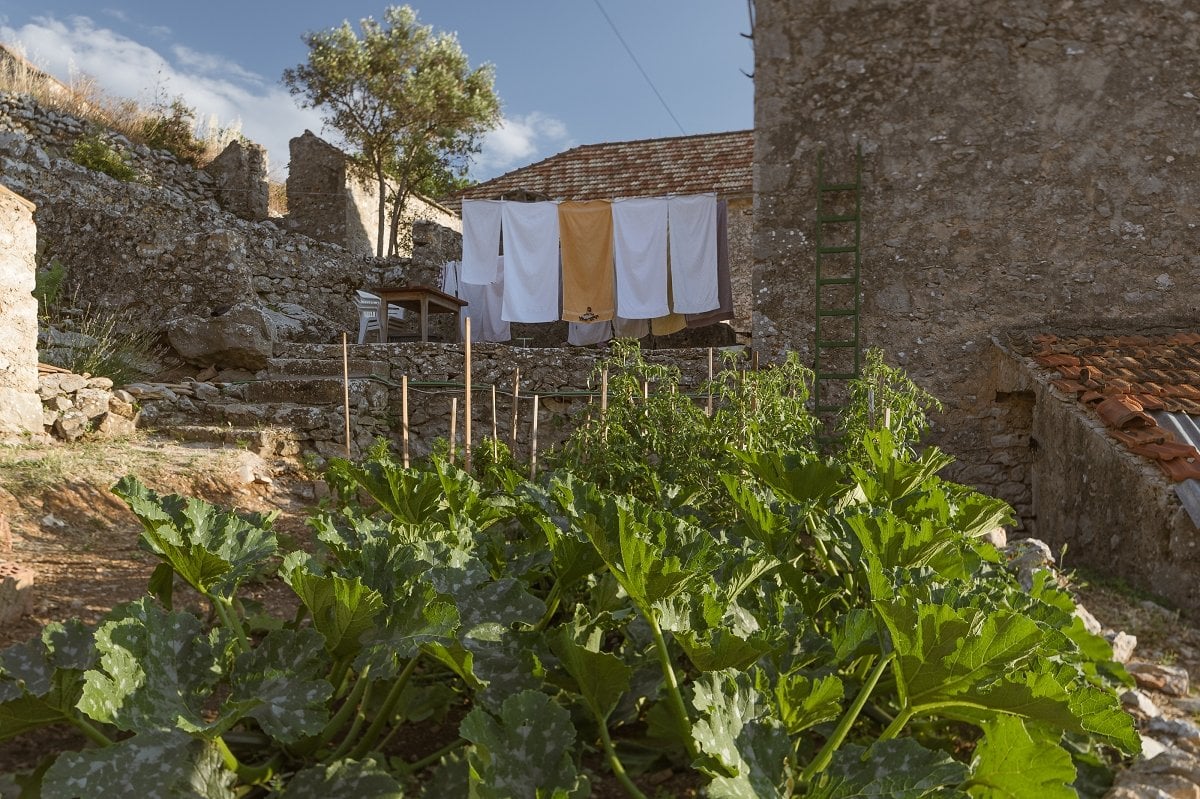


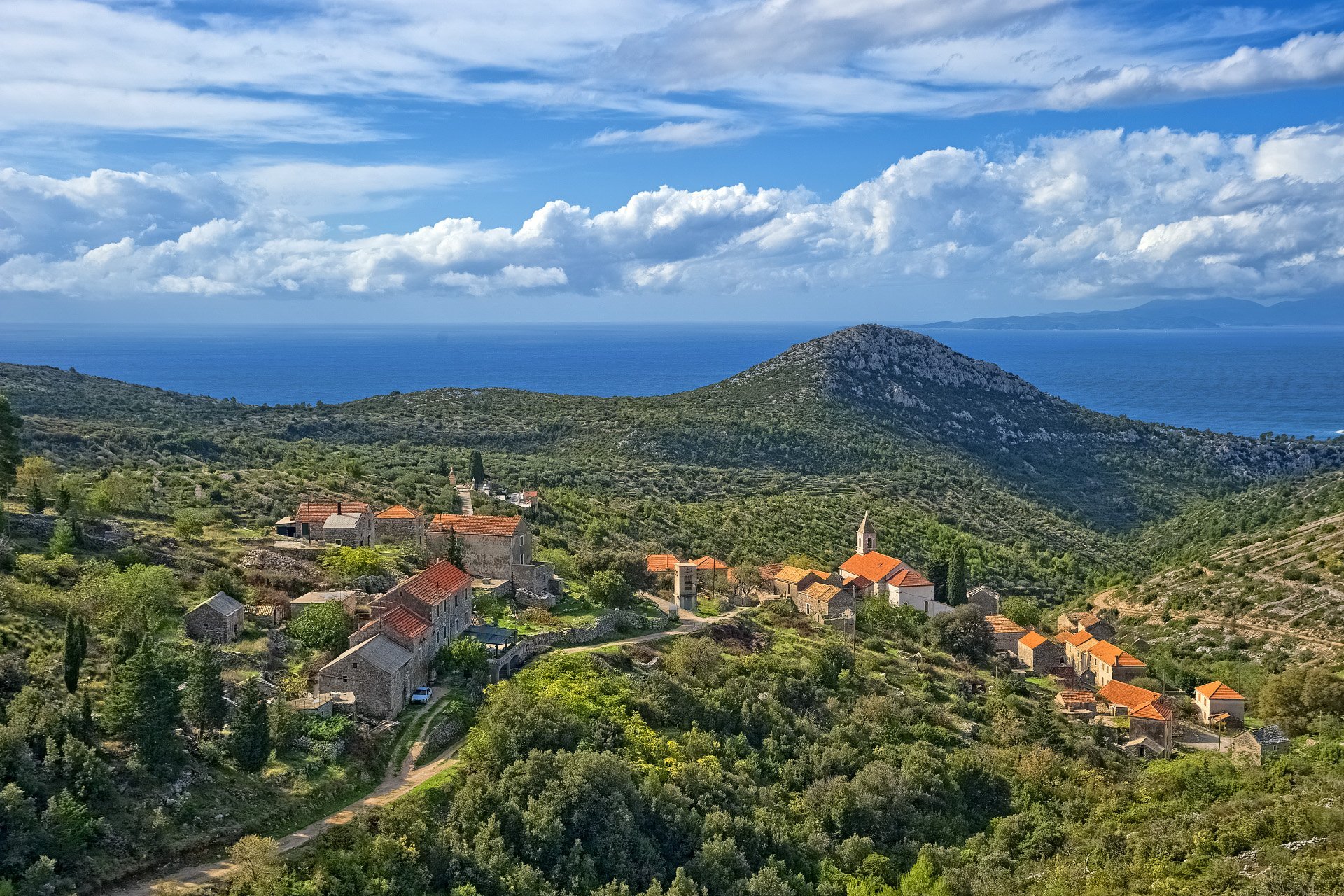


Velo Grablje
Velo Grablje (Gornje Grablje, as it was once known, meaning Upper Grablje) is a medieval village, founded in the 14th century, sitting near the ridgeline of the island at one of its highest points, with the Adriatic visible to the south and the scent of herbs rising from the dry stone terraces on all sides. It is one of the smallest inhabited villages on Hvar — for a period it had just five permanent residents. In 2026 that number has grown to 20, which in the context of this place feels like a true revival.
The reason for that revival is lavender. Velo Grablje was once the centre of lavender oil production not just for Hvar but for all of Dalmatia, exporting as far as Paris at the height of its trade. The hillsides were worked by hand, stones pulled from the ground one by one to make space for cultivation, then piled into the dry stone walls that still mark the landscape today. When synthetic alternatives arrived in the mid-20th century and demand collapsed, the village emptied.
What brought it back was a group of young people with family ties to the village who formed an association called Pjover and began, slowly, to rebuild the place's identity around its lavender heritage. The annual lavender festival on Hvar, a two-day gathering that features handmade oils, lavender honey, klapa singers and island crafts, is their most visible project. The olive press from 1894 still stands in the village intact. The sound of children playing here is something the village had not heard in decades, until recently.
The old stone streets and houses make for a short and rewarding walk, as if you’re in a time machine. No guide is needed, because the local barba at the village konoba will open up, tell you things no guidebook has and send you away with something homemade. The church is also one of the most beautiful village churches on the island, and the old distillery can be visited on a guided tour if booked in advance. For the best photographs of Velo Grablje, the viewpoint on the old road above the village is where most people pull over and stay awhile.
The heart of Velo Grablje today is Konoba Zbondini, run by a young couple who serve traditional Dalmatian food, including a lavender cheesecake. It has become somewhat of a local institution, in a setting that requires no embellishment. The restaurant Alavia, just above the village, has a view across the island and peka you’ll keep dreaming about, too.
Malo Grablje
Two kilometres further down the hill from Velo Grablje, reached by an ancient stone path between canyon walls, lies Malo Grablje, or “Little Grablje”. While Velo Grablje is a village returning to life, Malo Grablje is a village that stopped entirely. The last residents left in the 1960s, not because of hardship, but because the lavender trade had made them wealthy enough to invest in fishing operations down on the coast. They left, and the stone houses stayed.
The blight that destroyed the olive trees and grapevines in the early 20th century dealt the first blow: as traditional sources of income weakened, young people no longer saw a future in hard work on scarce island land. The residents had already bought land along the coast in today's Milna, where they saw new opportunities: fishing, tourism and an easier life by the sea. During the 1960s, almost all of them left. The relocation was so complete that, according to local records, even the remains of the deceased from the cemetery were transferred. They left, and the stone houses stayed. Trees grow through walls now. Wildflowers come up through the floors. Yet the church is intact and the olive press room still has its massive stone press.
What makes Malo Grablje unusual, beyond the haunting quality of the place itself, is a piece of local legend that has never been definitively proven or disproven. All the residents of Malo Grablje shared the same surname: Tudor. Legend holds that the village was founded by an illegitimate son of Henry VIII who had fled the British Isles and was shipwrecked off nearby Milna. There may be no concrete evidence, but the surname remains.
Two Tudors did come back.
Berti Tudor restored his family home in the village and runs with his family Konoba Stori Komin through the summer months, a reservations-only spot that cooks lamb the way it has been cooked here for centuries, in a dining room inside an abandoned village perched above a cliff. It is one of the most particular dining experiences on the island.
Berti, it is worth knowing, is the brother of Dinko, who runs with his family the restaurant Mala Milna on the coast below. The two brothers run what are personally our two favourite restaurants on the island - both genuine remnants of the Mediterranean as it once was, run by people with roots that go deeper than the olive trees.
Another Tudor family in Malo Groblje renovated their ancestral home and turned it into Villa Leto *Fulmin, one of the most characterful villa rentals on Hvar island (more on that below).
Both villages are accessible from Hvar Town on the old road to Stari Grad, turning left at the sign for Velo Grablje, approximately ten minutes by car. Malo Grablje is a short hike downhill from Velo Grablje, or reachable on foot from Milna on the coast. The old road has sharp bends; drive carefully and slowly, which the views will encourage anyway. You can also reach both villages via the new Stari Grad - Hvar road by turning right just before Milna.
For guests looking for luxury villa accommodation in these villages, Villas Hvar has two properties that know this landscape well. Villa Ourea *Zanino sits above Velo Grablje, in an 18th-century stone house restored in 2021, with a heated pool and three exceptional restaurants within five minutes. Villa Leto *Fulmin occupies a 1907 family home in Malo Grablje itself, restored in 2020, with a heated pool, sauna, jacuzzi and Konoba Stori Komin on your doorstep.
Both are privately owned, personally known to us and among the most distinctive luxury holiday villas on Hvar — historic in every stone, modern in every comfort. If you are deciding where to stay on Hvar and want something that feels genuine, we are always here to help.
Explore locations on Hvar
- The Island of Hvar
- Saint Nicholas Peak
- Town of Hvar
- Pakleni Islands
- Villages of Malo and Velo Grablje
- Village of Zaraće
- Village of Brusje
- Sviračina Bay
- Town of Stari Grad
- HORA or AGER
- Town of Jelsa
- Town of Vrboska
- Village of Basina
- Village of Pitve
- Village of Vrisnik
- Village of Svirče
- Village of Vrbanj
- Village of Dol
- Village of Rudine
- Village of Gromin Dolac
- Village of Zavala
- Village of Ivan Dolac
- Village of Bojanić Bad
- Village of Jagodna
- Village of Sv.Nedjelja
- Village of Humac
- Village of Zastražišće
- Village of Gdinj
- Town of Sućuraj
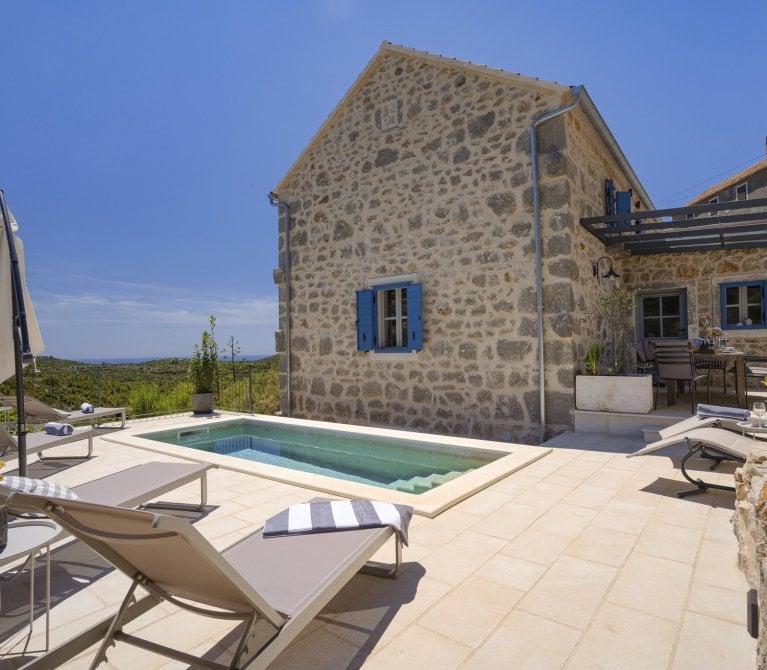
Villa Ourea *Zanino
Malo & Velo Grablje, sleeps 8 from: 0.00
Surrounded by lavender fields, Villa Ourea (known locally as Villa Zanino) unfolds at the gentle pace of village life. Lovingly restored from two 18th-century stone houses, it is a quiet expression of Hvar's heritage, thoughtfully reimagined for contemporary living.
Learn more